Skip links

I.D.E.A. at ICG

Inclusion, Diversity, Equity, and Accessibility

At Ithaca Children’s Garden, Inclusion, Diversity, Equity, and Accessibility (IDEA) are core to how we design our spaces, programs, and experiences. We strive to create a welcoming environment where children and families of diverse identities, backgrounds, and needs can fully participate, feel safe, and belong in nature.

Learn More

Garden Accessibility

Plan your visit to ICG with accessibility in mind.

Financial Access

Learn about scholarships and pay-what-you-can options.

IDEA Statement

Read about our commitments and current priorities.

Resources

Further reading and resources for caregivers.

Submit an Accommodation Request

If you need support to access the Garden, please click the button above to submit an accommodation request. Please note that our program registrations include accommodation questions, so you can share your needs directly through registration.

Garden Accessibility

We are continually working to reduce physical, sensory, and logistical barriers so that all visitors can enjoy the Garden. Below is an overview of current accessibility features, along with notes to help you plan your visit.

Accessible Parking
Three accessible parking spaces are available at the north end of the Cass Park parking lot, including two van-accessible spaces. From there, a paved route leads toward the Garden entrance.

Entrances and Gates
Gates open toward guests when entering from outside the Garden and away from guests when exiting from inside the Garden.

The Garden includes one gender-inclusive portable restroom. Additional fully ADA-compliant restroom facilities are available at the Yurt for program participants.

Some visitors may require assistance to fully experience the Garden and may attend programs and/or events with a support person. For paid events, admission is free for accompanying support persons.

Event-specific accessibility information—such as amplified sound, sensory considerations, or pay-what-you-can pricing—will be shared on individual event listings whenever possible.

For select events, mobility support may be available via golf cart. Please contact us in advance to inquire about availability.

Service animals, including guide dogs and hearing dogs, are welcome throughout the Garden. ICG does not permit dogs in the kitchen garden area, except service animals.

Pet waste receptacles are located in Cass Park and along the waterfront trail just outside the Garden. Visitors are encouraged to plan for water, shade, and rest breaks, especially during warmer months.

Tadpole Pond and Wetland Docks
The docks at both the Tadpole Pond and Wetland areas are wheelchair accessible.

Bulb Labyrinth Memorial Garden
This area features stone pathways that are wheelchair accessible.

Sound Garden
The Sound Garden offers engaging auditory experiences. Please note that sounds may be stimulating or overwhelming for some visitors.

Kitchen Garden
The Kitchen Garden includes wheelchair-accessible raised planters.

The Yurt
The Yurt is accessible to program participants and includes:

  • A wheelchair-accessible entrance ramp
  • An ADA-compliant restroom
  • A wrap-around deck designed for accessible use

Path Widths
Most Garden pathways are at least 5 feet wide, allowing space for wheelchairs and strollers to pass comfortably. In a few areas, paths narrow to approximately 3 feet.

Path Materials
Most paths are made of packed stone dust, which generally provides good traction for wheelchairs and other mobility devices. The boardwalk areas are constructed of wooden planks. A mulched area exists between the Kitchen Garden and the utility area; however, a stone dust path runs alongside it as an alternative route.

Weather Considerations
We make every effort to address mud, ice, and snow, but please be aware that paths may be more difficult to navigate after heavy rain or freeze–thaw cycles. During winter months, we aim to clear snow from primary pathways when possible.

Please note that during large events, pathways may feel more crowded.

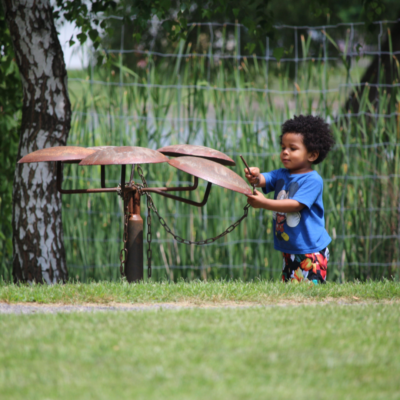
a child stands holding a metal stick that they use to tap on metal cymbals in the outdoors
The sound garden can be loud. Visitors who prefer quieter spaces may want to explore other areas first.
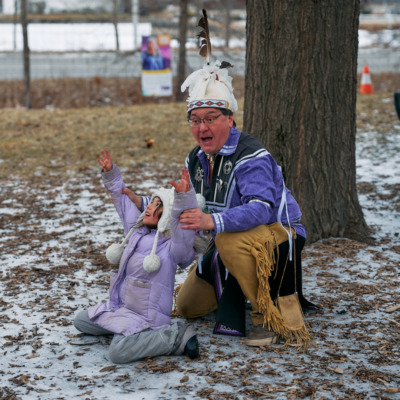
A man in traditional Haudenosaunee dress interacts with a child in winter clothing by raising their arms
Accessibility details are always included in event listings. Photo: Haudenosaunee storytelling by Perry Ground at the Festival of Fire & Ice.
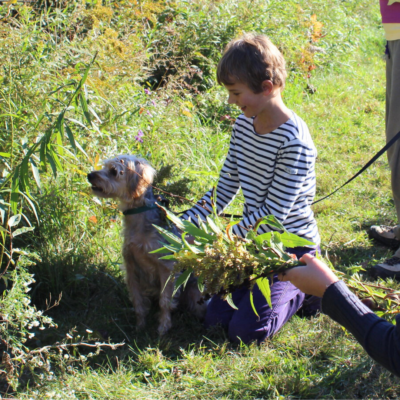
A child with a small dog in an outdoor setting
Service animals, including guide dogs and hearing dogs, are welcome throughout the Garden. ICG does not permit dogs in the kitchen garden area, except service animals.

Financial Access

ICG is committed to ensuring that cost is never a barrier to participation. We offer scholarships and pay-what-you-can options for many programs and events, made possible through the generosity of our community.

Families are encouraged to apply for scholarships or choose the pricing level that best fits their circumstances. No additional documentation is required, and all requests are kept confidential.

More information about how to apply for scholarships can be found directly on our program pages. If you’d like to support ICG’s Scholarship Fund or learn more about its impact on our community, click the button below.

Support Scholarship
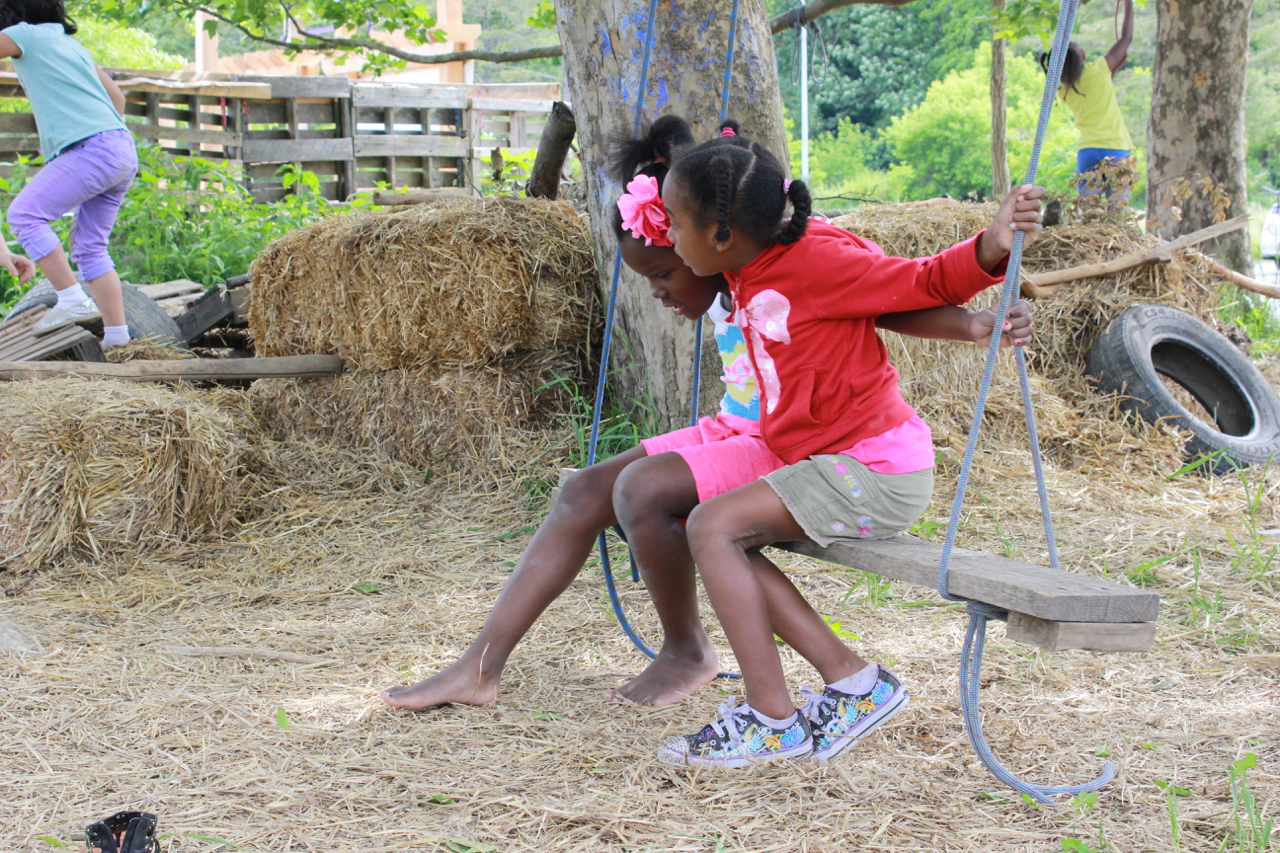
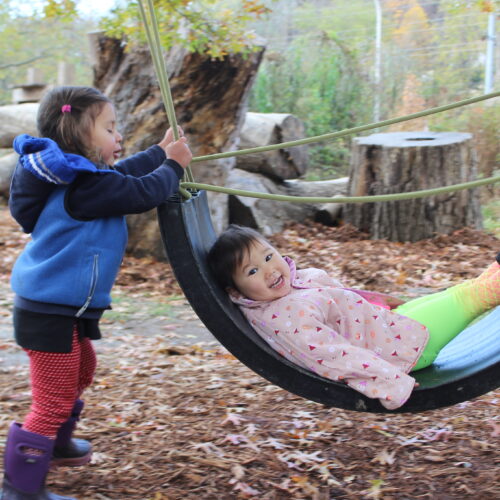
Two children play on a plastic swing

IDEA Statement

In 2025, ICG embarked on a process to draft an organizational IDEA statement. Developed by a staff and board committee, our Statement charts a shared vision for IDEA at ICG, articulates the values and beliefs driving this work, and communicates our current priorities —including a focused effort on accessibility and disability inclusion in 2026.

Read the Full IDEA Statement

Resources

In the interest of celebrating community impact, sharing stories of growth, and providing a transparent look at our operations, ICG releases annual IDEA and Scholarship reports. They can be found here and on the Transparency page.

2024

Below, you’ll find select blog posts relevant to ICG’s IDEA work. This section will be updated periodically.


Talking to Children about Race and Racism

This blog post includes a curated list of resources for teaching kids about racism and racial bias, including articles on how and why to talk with children about race, podcasts like Embrace Race and NPR’s Talking Race With Young Children, and videos such as How to Talk to Kids About Race and Systemic Racism Explained. Additional recommended resources include guides for anti-bias children’s books, lists of Black-owned bookstores, and organizations like Teaching Tolerance and The Conscious Kid, with an invitation for the community to share more resources.


We Must Do More, We Must Do Better, and We Must Do it NOW

The post reaffirms ICG’s commitment to racial justice and calls on its community to learn and take action by engaging with key readings on race, play, and nature including: Dr. Corliss Outley and Dr. Harrison Pinckney’s essay “Playing While Black” and their keynote on creating safer, more inclusive play spaces; Dr. Carolyn Finney’s book Black Faces, White Spaces, which examines how outdoor and environmental spaces are racialized in America; and the work of Dr. J. Drew Lanham, including “9 Rules for the Black Birdwatcher,” Birding While Black, and The Home Place, which explore how culture shapes relationships with nature.


Take a Rock, Learn Their Story

The post reflects on The Village Rock Garden installation, created by artist Lisa Spring Orinda and hosted at Ithaca Children’s Garden as a memorial honoring Black and Brown lives lost to racial violence. It invites visitors to hold the rocks, say the names aloud, and use the space to reflect and commit to anti-racist action. The post also points readers to resources for further learning—Say Every Name, Renee Ater’s List of Black People Killed by Police, Al Jazeera’s Know Their Names, and Mapping Police Violence—and emphasizes that green spaces can only be truly safe and welcoming for all children once historic and ongoing racial violence is acknowledged and addressed.

Explore Inspiring Environmental Leaders — a collaborative project between ICG, U.S. Fish and Wildlife Service, and The Learning Farm — featuring BIPOC environmental leaders.

Visit the Garden to see the banner installation in person, then continue online to read the full reports written by local youth. These stories share real experiences, passions, and leadership in environmental justice — and we hope they inspire your own environmental journey.

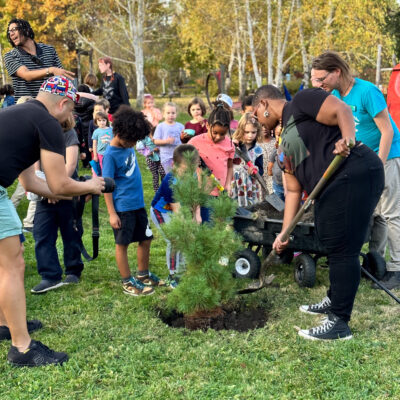
A group of adults and children stands in the Garden planting a tree using a shovel
Colah B. Tawkin—author of Black in the Garden and founder of the Underground Arborist—led ICG After School students and guests from the Greater Ithaca Activity Center in a tree-planting event at the Garden.

Do you have a question or concern about an IDEA-related topic that wasn’t answered here? Please reach out to Trey Ramsey, ICG’s Outreach and Inclusion Manager: trey@ithacachildrensgarden.org

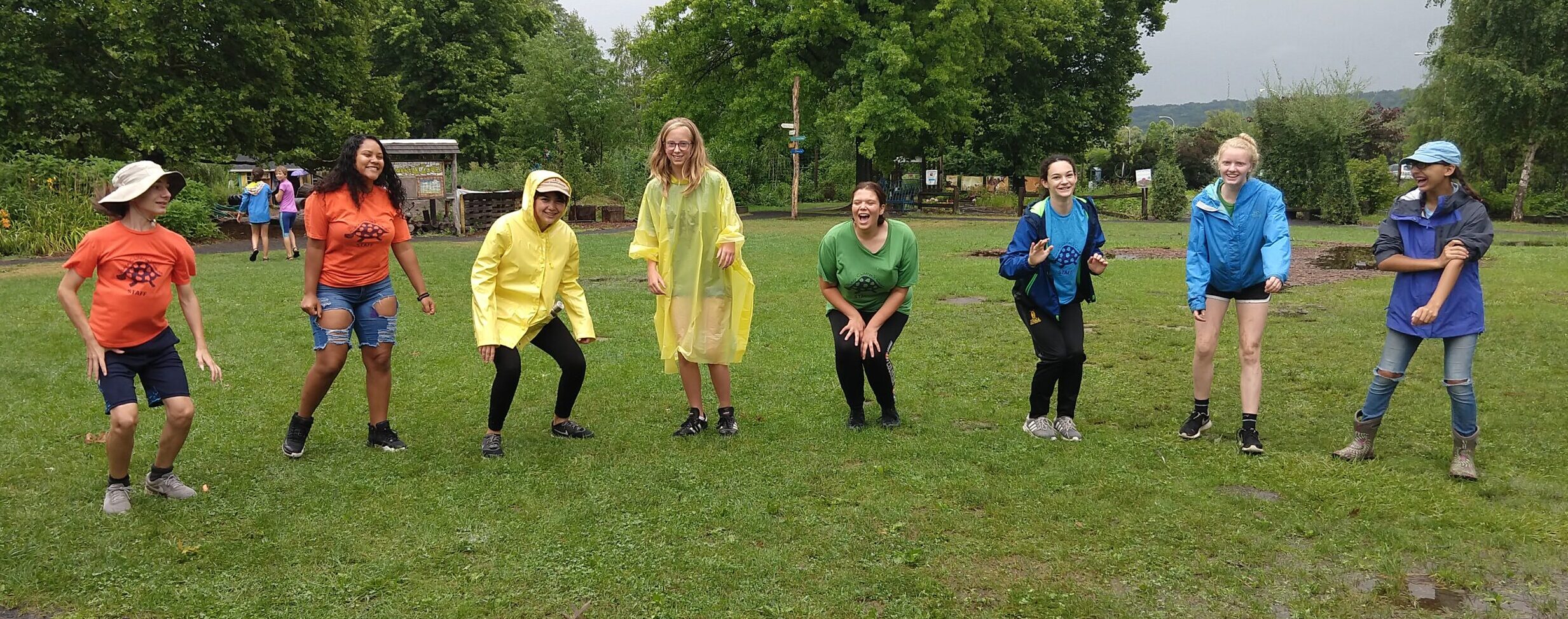
A group of eight people in rainbow colors stand in a line, laughing outdoors
A rainbow of laughter and joy at ICG.